

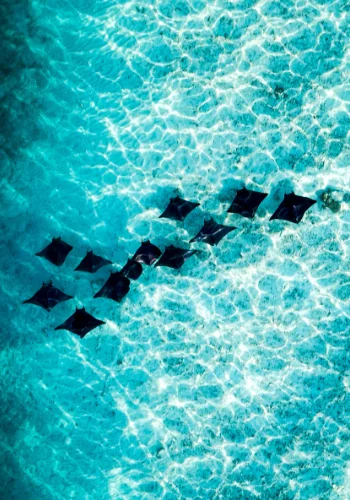
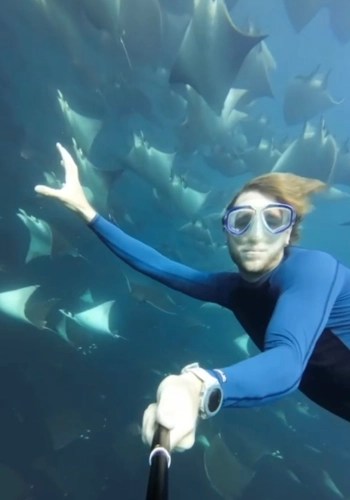
An intimate ocean safari through Mexico’s Sea of Cortez, where thousands of mobula rays gather in one of nature’s most extraordinary displays.
“I will never forget the first time I entered the water and was surrounded by thousands of rays. It was breathtaking.”
The first time I saw mobula rays, I forgot to breathe
The sea was completely still that morning. The kind of quiet where you can hear your own breath through the snorkel. Then, out of nowhere, the water started to move: one ray, then another, and suddenly hundreds. They were everywhere, gliding just below the surface and leaping into the air. I just floated there, trying to take it all in.
What is the mobula ray migration?
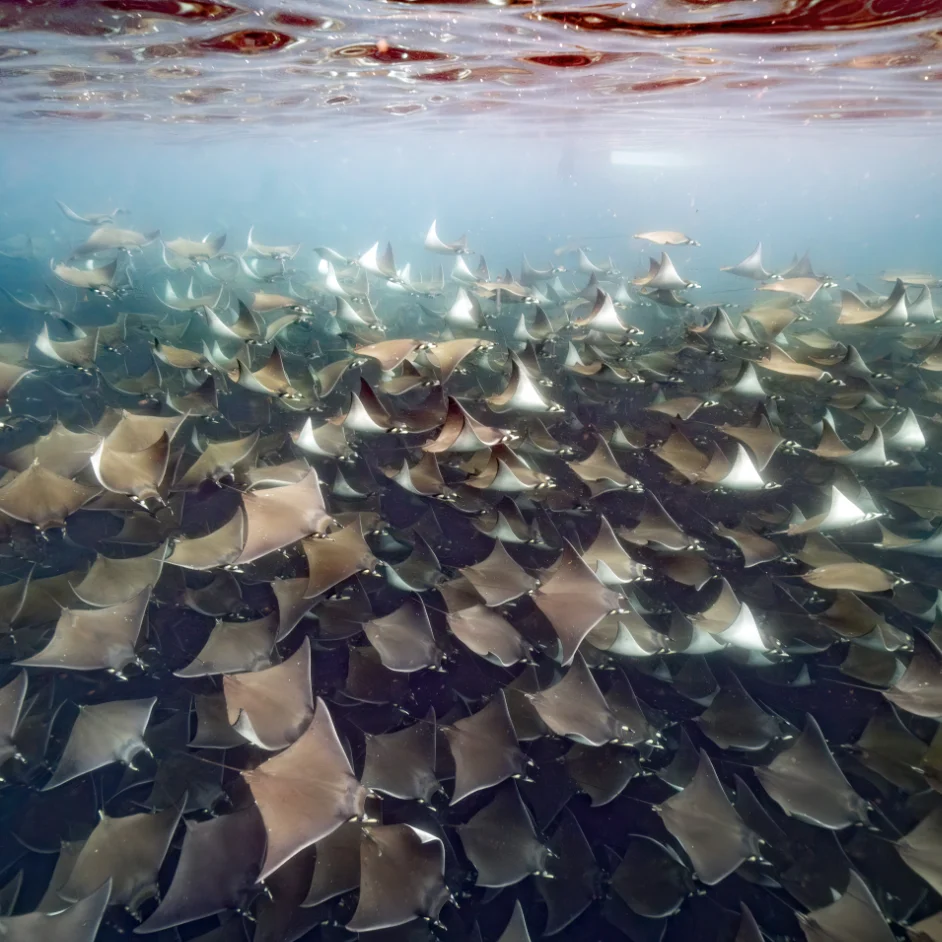
The mobula ray migration, sometimes called the aggregation, describes thousands of Mobula munkiana rays, also known as Munk’s devil rays, that gather in massive schools sometimes stretching for hundreds of meters. They leap, glide, and swirl in the blue – a living current of motion and light. Scientists still don’t fully understand why they jump, but it’s believed to be part of their courtship ritual, a way to communicate or even shake off parasites.
Whatever the reason, seeing it with your own eyes is something you never forget. It’s one of those moments that makes you feel small in the best possible way.
Where do large mobula ray migrations occur worldwide?
Mobula ray migrations can be seen in several parts of the world – from the Azores (Portugal) to the Philippines and the Galápagos Islands. In these regions, the rays gather seasonally, often following plankton blooms and shifting ocean currents. However, these encounters are usually not as large, more scattered, and less predictable.
Baja California Sur in Mexico, on the other hand, is different.
The Sea of Cortez is one of the most biologically rich marine environments on the planet — often called “the world’s aquarium”. Its unique geography creates ideal conditions for life to thrive: deep ocean trenches meet shallow coastal shelves, and seasonal upwellings bring nutrient‑rich water to the surface. This abundance of plankton attracts mobula rays, whales, dolphins, and countless other species.
During spring, when the water warms and food becomes plentiful, thousands of mobulas gather here to feed, mate, and move together in vast schools and the waters of Baja transform into a stage for one of the ocean’s greatest natural spectacles.
What makes Baja truly special is that all of this happens close to shore, in calm, clear water, where it’s possible to observe the spectacle safely and respectfully. It’s one of the few places on earth where the ocean still feels wild and alive yet remains accessible enough to experience it intimately.
What attracts mobula rays to aggregate in specific locations?
While the exact reasons for mobula ray aggregations are still being studied, scientists believe they are influenced by a combination of ocean conditions and social behavior. Changes in water temperature, daylight, and food availability seem to signal the start of the season, drawing rays together in certain regions.
Best time to observe mobula rays in the Sea of Cortez
The best time to see the mobula ray migration in Baja California is from late April to early June.
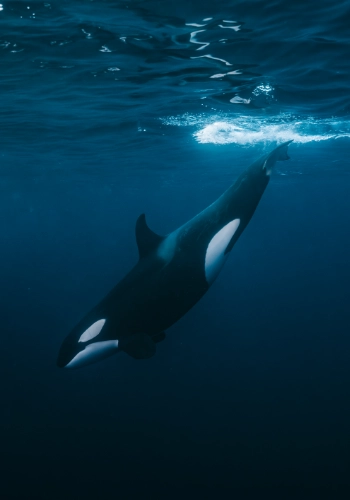
During these months, mobulas gather in huge numbers – but they’re not alone. You might spot dolphins racing alongside the boat, whales breaching in the distance, or sea lions playing near the reefs. Sometimes, if you’re lucky, even orcas appear. This is the time when the Sea of Cortez feels most alive. The water is warm, the visibility is clear, and every day brings new encounters. It’s a reminder that the ‘world’s aquarium’ still keeps some of its wildest secrets.
Each day on the water feels different. Some mornings are calm and meditative; others are filled with energy and movement. That unpredictability is what makes Baja so special. It’s nature on its own terms.
If you’re planning a trip, May is usually the peak month, when the largest schools gather close to shore and the conditions are ideal for both snorkeling and freediving.
“Baja is one of the most special places on earth for me. The Sea of Cortez is full of surprises, and you never know what can happen.”
Can you see mobula rays at other times of the year in the Sea of Cortez?
Mobula rays can be seen outside the main migration season, but the experience is very different. Outside the peak months (late April to early June), particularly from March to July, you may still encounter smaller groups or individual rays while snorkeling or diving in the Sea of Cortez. Occasionally, mini‑aggregations happen later in the year, depending on water temperature, plankton levels, and currents.
However, sightings outside the main season are less predictable. You might see a few rays gliding by rather than the breathtaking, synchronized leaps that define the migration. So while it’s possible to see mobulas year‑round, May remains the best month if you want to witness the full magic of the migration.
Why choosing the right operator matters for mobula ray ocean safaris
The mobula ray migration has become increasingly popular in recent years, and with that popularity comes responsibility. Following ethical practices can make a huge difference, both for the animals and for your experience. When boats or snorkelers get too close, the rays can become stressed and change their natural behavior, often diving deeper or leaving the area altogether. This not only disrupts their feeding or mating patterns but also reduces the chance of meaningful encounters for everyone involved.
A truly ethical ocean safari and expedition means small groups, experienced guides, and a deep respect for the wildlife. It means never chasing or surrounding the rays, keeping a safe distance, and entering the water quietly. It’s about observing, not intruding.
By keeping respectful distances, limiting group sizes, and entering the water calmly, we allow the rays to remain relaxed and curious and that’s when the most magical, natural interactions happen.
If you’re ever unsure whether an operator is ethical, look for these signs:
- Small group sizes (no overcrowded boats)
- Guides who brief you on respectful behavior before entering the water
- No touching, chasing, or blocking animals
- A focus on education and conservation, not just photos
True luxury isn’t about excess – it’s about experience with purpose.
If you are looking for an operator for mobula ray expeditions, here we are
If you’re dreaming of seeing this for yourself, our collaboration with Baja Below Surface offers exactly that: a small‑group, eco‑luxury ocean safari designed around ethical wildlife encounters.
When I first connected with Baja Below Surface, I knew they shared the same values that guide everything I do at Mālama Earthventures: respect for nature, authenticity, and intention. Their team works with local experts, ensuring every encounter is safe, responsible, and deeply meaningful.
We work only with trusted local experts who understand the rhythms of the ocean and prioritize the well‑being of the animals.
Why Baja Holds a Special Place in My Heart
For me, these expeditions are more than travel, they’re a way to share what I love most about the ocean. I’ve spent years exploring the world’s oceans – diving in Indonesia and the Galápagos, working on shark conservation projects in Fiji, and organizing orca trips in Northern Norway with the Swiss NGO Orcestra. But Baja has a special place in my heart.
There’s something wild and genuine about this place. The desert meets the sea, and life thrives in the contrast. Every time I return, I’m reminded why I started Mālama Earthventures: to create journeys that connect people with nature in a way that’s both luxurious and deeply respectful.For me, travel isn’t about just ticking bucket list boxes. It’s about slowing down, being present, and letting the world surprise you.
“For me, travel isn’t about just ticking bucket list boxes. It’s about slowing down, being present, and letting the world surprise you.”
Exploring Baja Beyond the Ocean and the Mobulas
While the mobula ray aggregation is the highlight, Baja offers so much more. You can explore Espíritu Santo Island, where playful sea lions swirl around you in turquoise water. You can wander through La Paz, tasting local street food and watching the sunset from the malecón. Or head inland, where the desert changes after the rains and the night sky feels endless.
What I love about Baja is the contrast: the stillness of the desert, the energy of the ocean. It’s a place that feels untouched and alive at the same time.
Join the Mobula Rays & Big Animals Ocean Safari: May 31 – June 6, 2027 & June 8 – June 14, 2027
If you’ve always dreamed of seeing this spectacle for yourself, join me in May 2027. Our Mobula Ray Migration Ocean Safari Expedition with Baja Below Surface is a small‑group, eco‑luxury journey created for travelers who want to experience it in the most respectful and meaningful way.
What to expect:
- 7 nights in boutique accommodation surrounded by nature
- 5 full days on the ocean (7–8 hours daily)
- Expert guides and ethical wildlife encounters
- Sunset activities
- All meals, transfers, and daily video footage included
- Small group size (max 6 people) for a truly personal experience
- Swimming, snorkelling, and/or freediving, no scuba diving
Where?
La Ventana, Baja California Sur, Mexico
We’ll spend our days exploring the Sea of Cortez, searching for mobulas, dolphins, whales, and whatever else the ocean decides to reveal. Each evening, we’ll return to comfort, good food, great company, and the quiet hum of the desert.
A Memory You’ll Never Forget
It’s hard to put into words, but this is one of those experiences that stays with you. Watching the rays move through the water, hearing them break the surface, it’s something you don’t forget.