

This is a Galápagos Islands overview guide — land, islands, wildlife, cruise, and a primer on diving. If diving is your primary reason for going, a separate deep-dive guide covering Wolf & Darwin, liveaboard selection, and dive conditions is coming soon.
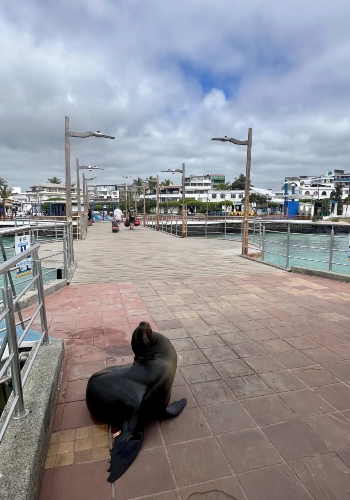
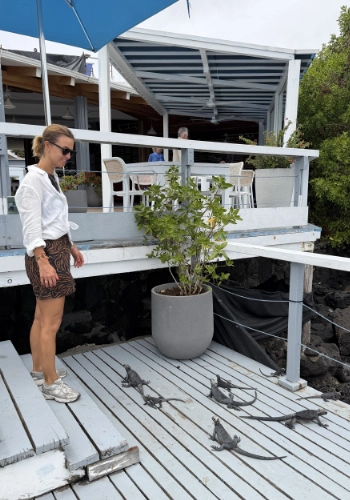
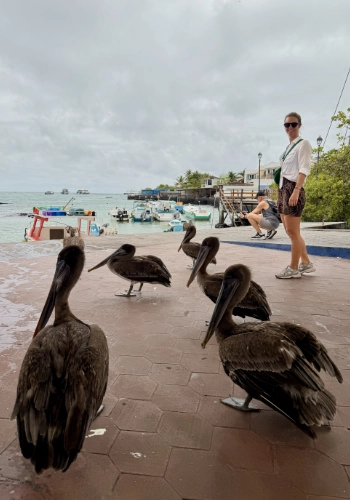
The moment I arrived, I knew the Galápagos were different to anything I had seen before. Sea lions on the dock steps. Marine iguanas at the edge of the restaurant terrace, completely unbothered. Pelicans standing right alongside the vendors at the fish market, waiting for their share. Wildlife everywhere — just part of daily life.
I spent a month in the Galápagos in November — moving between islands, diving, watching, and simply being there. Everything in this guide comes from that time: the islands I walked, the animals I sat next to, the moments I didn’t expect.
Key Takeaways
- Galápagos is an archipelago, not one place. Each island has its own wildlife, landscape, and character. The more islands you cover, the richer the experience.
- There is no bad time to visit — but timing matters. The dry season (June to December) is best for diving and iconic wildlife like waved albatrosses. The wet season (January to May) brings calmer seas, baby sea lions, and sea turtle nesting at its peak.
- Not all wildlife is everywhere. For example, marine iguanas feed underwater around Isabela and Fernandina — one of the most unexpected snorkelling encounters in the archipelago. Whale sharks pass through Wolf and Darwin and are only reachable by dive liveaboard. Knowing this before you plan makes a real difference to your itinerary
- Structure your trip in phases. A few days land-based, followed by a small-ship island cruise, and a dive liveaboard if you dive — that combination gives you the fullest picture of the archipelago.
- Book early. Small ships sell out six to twelve months in advance. Dive liveaboards to Wolf and Darwin fill even earlier. This is not a trip to leave to the last minute.
- Galápagos requires real planning. The right season, the right islands, the right boat — these decisions shape everything. Getting them right from the start is what makes the difference between a good trip and an exceptional one.
About the Galápagos Islands
The Galápagos Islands are an archipelago of volcanic islands sitting in the Pacific Ocean, roughly 1,000 kilometres off the coast of Ecuador. The islands lie on the equator, where multiple ocean currents converge — cold from the south, warm from the north — creating a marine ecosystem unlike anything else on the planet. That collision of currents is the reason the wildlife here is so extraordinary, both above and below the waterline.
Charles Darwin visited in 1835 and what he observed here shaped the theory of evolution. The reason? The islands are so isolated that species evolved entirely separately from the mainland — and from each other, island by island. Around 97% of the land area is protected as a UNESCO World Heritage Site and national park. Visitor numbers are capped. Every site requires a licensed naturalist guide. The infrastructure for protection is real, and it shows.
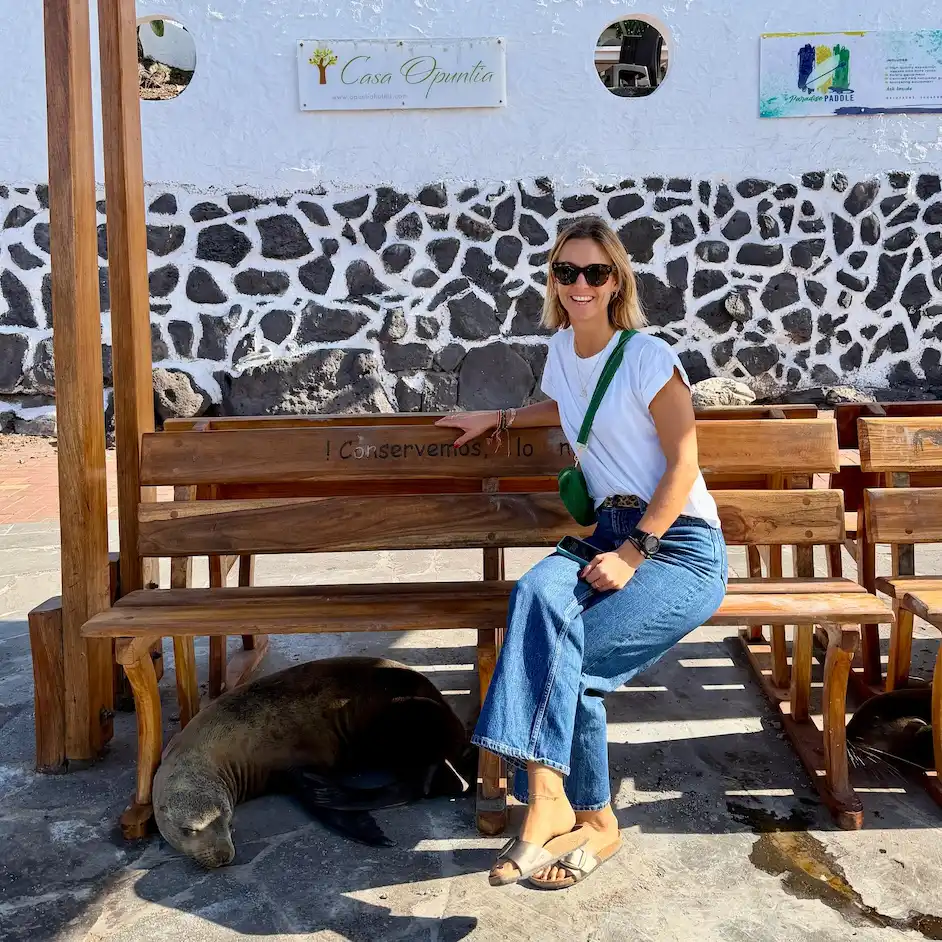
What it creates on the ground is something that feels almost surreal: wildlife that has never learned to fear humans. Animals don’t flee. They don’t hide. They go about their lives — nesting, feeding, sleeping, courting — and you are simply passing through their world.
“I was absolutely stunned. This place is unreal, and honestly I still can’t fully believe everything I experienced there.”
Every Island Is Different — Visit More Than One to See the Full Picture
Galápagos is not one place. It’s an archipelago of worlds, each shaped by different geology, different currents, different elevations, and different evolutionary pressures. An itinerary that only visits one or two islands scratches the surface. The more islands you cover, the more the picture builds.
I visited many islands during my month there — and honestly, each one had something special. These are some of the highlights, but the right combination for you depends entirely on your timing, your interests, and how long you have. That’s exactly where Malama Earthventures can help — putting together the right itinerary for the Galápagos is one of my favourite things to do.
Española Island
Española is one of the oldest islands in the Galápagos archipelago, and one of the most dramatic. From April to December, it’s home to the only breeding colony of waved albatrosses in the world — birds with nearly two-metre wingspans that perform elaborate, almost comedic courtship dances right at your feet. The blowhole at Punta Suárez sends ocean water thirty metres into the air. The sea cliffs are stacked with Nazca boobies and red-billed tropicbirds.
And then there are the marine iguanas of Española. Come November and December, many of them turn a vivid red and green for the Christmas season, earning the nickname Christmas iguanas. It’s one of those wildlife spectacles that stops you mid-sentence. No other island in the archipelago has them like this.


“Española was something else. The sheer number of birds — blue-footed boobies, waved albatrosses, Nazca boobies, all breeding, all right there — and they simply weren’t disturbed by us. We kept a respectful distance but they were so close. And the Christmas iguanas — that bright red and green, it was just beautiful.”
Bartolomé Island
Bartolomé offers one of the most iconic views in the Galápagos — the famous Pinnacle Rock rising from a turquoise bay, with the volcanic landscape behind it. But beyond the view, it’s one of the most reliable places to snorkel alongside Galápagos penguins, who dart through the water with an almost reckless speed. The hike to the summit takes you across a landscape that looks genuinely lunar — lava formations, spatter cones, almost no vegetation.

Rábida Island
Rábida’s red-ochre sand beach is absolutely stunning. The colour comes from high iron oxide content in the volcanic rock. Sea lions haul out on the beach, pelicans nest in the saltbush just behind it, and the snorkelling in the bay often turns up seahorses and reef sharks. And if the timing is right, flamingos gather in the lagoon just inland — watching them move slowly through the water, that deep pink against all that red, green and blue, is one of those quietly beautiful moments you don’t forget.


Fernandina Island
Fernandina is the youngest and most volcanically active island in the archipelago and one of the most pristine. It has never been inhabited and has no introduced species. Flightless cormorants — found nowhere else on Earth — dry their vestigial wings on the lava rocks. Marine iguanas cover every surface. Galápagos penguins move along the shoreline. Sea lions sleep in piles.

Genovesa Island
Genovesa is a bird island, pure and simple, and it’s extraordinary. Its cliffs and interior are packed with red-footed boobies — Genovesa holds the largest colony on the planet. Frigatebirds nest alongside them. Short-eared owls hunt storm petrels in the open during the day, which is something you don’t see anywhere else. Getting here requires a longer crossing, which keeps visitor numbers lower and the sense of remoteness is part of the experience.


Santa Cruz, San Cristóbal, Isabela & Floreana: Your Land Bases
The Galápagos has four inhabited islands, each with its own character and rhythm.
Santa Cruz is the most visited — Puerto Ayora has the Charles Darwin Research Station and highland access to wild giant tortoises at El Chato.
San Cristóbal is quieter and has a more relaxed pace that many travellers, including myself, appreciate. It has its own highland tortoise reserve and the El Junco lagoon which is one of the few permanent fresh water lakes in Galápagos.
Isabela is the largest island, home to active volcanoes, a significant penguin population, the extraordinary Punta Vicente Roca dive site, and a pace of life that feels genuinely unhurried.
Floreana is the smallest and least visited of the four — with a fascinating human history, a flamingo lagoon, and one of the most legendary post offices in the world: a barrel on the beach where sailors have been leaving and collecting mail for centuries. Accommodation options are simple and very limited compared to the other islands, which gives it a quieter, more off-the-beaten-track feel.


How to Plan a Galápagos Island Trip: Land, Cruise, and Diving
The structure of your trip determines almost everything — which islands you reach, how deep you go into the wildlife experience, and how much of the underwater world you access. The recommendation for anyone who wants the full picture:
2–3 days land-based → 4–5 days island cruise → dive liveaboard (if you dive)
Phase 1: Land-Based (2–3 Days)
Start on one of the inhabited islands — I suggest Santa Cruz, San Cristóbal, or Isabela — before heading out on your cruise. Land-based time gives you the island rhythm — the community, the markets, the local restaurants, the evening walk past sea lions on the dock. It’s also an easy way to settle into the pace of the islands before moving into the more expedition-style days at sea.
On Santa Cruz, Finch Bay Hotel is one of the most established eco-luxury bases. The hotel runs on its own desalination and water-treatment systems, uses solar power, and is deeply committed to minimising its footprint while supporting the local community. It’s quietly located by the beach in Puerto Ayora — the kind of place where you can watch marine iguanas cross in front of your room and feel part of the island rather than a visitor passing through.
Day trips from a land base can reach several accessible islands and snorkelling sites — Española and Bartolomé, for example, are both reachable as day trips and absolutely worth it.
Phase 2: Island Cruise (4–5 Days)
A cruise is where the most remote islands of the Galápagos open up. Fernandina and Genovesa, for example, are not reachable on day trips — a cruise is the only way to get there. You wake up at a new island every morning, go ashore with your guide before the heat builds, snorkel directly from the panga, and eat dinner as the boat moves overnight to the next site. It’s a completely different way of experiencing the archipelago — and for most people, the part of the trip that stays with them longest.
Both small and large ships visit these sites, but I always recommend smaller vessels — ideally 8 to 16 guests. Not because of access, but because of everything else: the flexibility, the intimacy, the ability to linger a little longer, the feeling that this is your trip rather than a group tour.
Examples include the Monserrat Yacht, a comfortable small yacht with excellent guiding and service. For travellers looking for a truly high-end experience, Hermes is in a class of its own: the only catamaran in the Galápagos offering just ten suites, each with a private balcony, panoramic windows, and a level of personalised service that feels closer to a boutique hotel than a boat. It’s quiet, exceptionally stable, and designed to minimise environmental impact while maintaining exceptional comfort.
Cruises also include snorkelling stops at some of the most extraordinary sites in the archipelago. Depending on the itinerary, Punta Vicente Roca on Isabela is one of them — cold water, strong current, and incredible marine life.


“We snorkelled at Punta Vicente Roca and it was mind-blowing. The water was freezing cold but we saw feeding marine iguanas, turtles, Galápagos bullhead sharks, flightless cormorants diving and mola molas — all in one snorkel.”
Phase 3: Dive Liveaboard (If You Dive)
If diving is part of your trip, a dedicated liveaboard is a separate experience entirely — not an add-on to the cruise, but its own journey with its own itinerary. More on this below.
Best Time to Visit the Galápagos Islands
There is no bad time to visit Galápagos. The wildlife is present year-round. What changes is which species are most active, what the sea conditions are like, and what the landscape looks and feels like. The right time depends entirely on what you’re prioritising.

Cold / Dry Season: June to December
Cooler, drier, windier — and for most wildlife and diving purposes, the peak season. The Humboldt Current pushes cold, nutrient-rich water north from Antarctica. Water temperatures drop to 16–18°C at depth, but marine life density increases significantly. This is the season most divers specifically target — whale shark encounters are most commonly reported from June onwards, hammerheads school in force around Wolf and Darwin.
On land: waved albatrosses on Española, blue-footed booby courtship dances, active Galápagos penguins. The landscapes are drier and more austere — volcanic and elemental. The sea can be rougher, which matters for those prone to seasickness.
The cold / dry season from June to December is best for: Divers, wildlife photographers, albatross season, penguin activity, hammerhead schooling.
Warm / Wet Season: January to May
Warmer, calmer, greener — excellent for families, snorkellers, and those who want gentler conditions. Vegetation flushes green. Sea turtle nesting peaks between January and April. Marine iguana colonies are highly active. Baby sea lions are everywhere.
The warm / wet season from January to May is best for: Families, snorkellers, turtle nesting, lush green landscapes, calmer crossing conditions, baby sea lions.
Not All Wildlife Is Everywhere: Where to See What in the Galápagos
Not all wildlife is everywhere. Some of the most remarkable species in the Galápagos are found only on specific islands — and knowing this before you plan makes a real difference to your itinerary.
Waved albatross — breeds exclusively on Española. This is the only breeding colony in the world. They arrive April to December and the courtship display, two birds facing each other going through an elaborate sequence of moves, is one of those things you won’t forget.
Blue-footed booby — found on several islands in the Galápagos, but North Seymour and Española are where you get the full courtship display up close, the famous high-stepping walk that shows off those vivid blue feet.
Red-footed booby — Genovesa holds the largest colony on the planet. Short-eared owls also hunt storm petrels here in open daylight, which happens nowhere else in the archipelago.
Flightless cormorant — found only on the islands Fernandina and Isabela. They’ve lost the ability to fly entirely, and you can watch them drying their small, useless wings on the lava rocks at the water’s edge.
Christmas iguanas — only on Española. From November to December, marine iguanas on Española turn a vivid red and green. Nothing else in the Galápagos looks quite like it.
Galápagos penguins — the largest populations live around Isabela and Fernandina, but the best place to snorkel alongside them is Bartolomé, near Pinnacle Rock.
Flamingos — the lagoon at Rábida is one of the most reliable spots, and Floreana also has a flamingo lagoon worth visiting.
Giant tortoises across five subspecies — Isabela is the only island home to five distinct subspecies, each native to one of its five volcanoes. You can encounter them in the wild or visit the Arnaldo Tupiza Breeding Centre near Puerto Villamil.
Giant Tortoises: Where to See Them
Giant tortoises typically live well over 100 years and can weigh up to 250 kilograms — and they have survived virtually unchanged for millions of years. Standing close to one in its own habitat is one of those genuinely humbling wildlife encounters.

In the Wild
The best wild tortoise experiences on Santa Cruz happen in the highlands, particularly around El Chato, where tortoises move freely through private farmland. No enclosures. No staging. Just tortoises going about their lives. On Isabela, the experience is equally special — and less talked about. The island is home to five distinct subspecies, each native to one of its five volcanoes, and you can encounter them roaming freely in the wild.

Breeding and Conservation Centers
If you want to understand the conservation story behind the species, the breeding centres are worth visiting. The Charles Darwin Research Station in Puerto Ayora on Santa Cruz is absolutely worth a visit — you learn a lot about the conservation efforts and the history of the species, including the story of Lonesome George, the last Pinta Island tortoise. On Isabela, the Arnaldo Tupiza Breeding Center near Puerto Villamil breeds and rehabilitates tortoises. And on San Cristóbal, La Galapaguera de Cerro Colorado operates in semi-natural conditions in the highlands, where young tortoises hatch without incubators — the only place you can see the San Cristóbal subspecies in a rewilding programme.
“I have a deep respect for these animals. There’s something wise about them — and the fact that they live so much longer than we do makes it even more humbling. Seeing the babies alongside the really old ones, all in the wild, no fence — that was a privilege.”
Galápagos Penguins: Where to See Them
Galápagos penguins are the only penguin species found north of the equator — and one of the most surprising wildlife encounters the archipelago offers. They’re small, easy to underestimate, until you see them underwater, where they move with extraordinary speed and precision.
The largest populations live around Isabela and Fernandina. The Bartolomé Island site near Pinnacle Rock is the most accessible location for snorkelling alongside them — regularly included in cruise itineraries and the encounters here are exceptional.
Seeing them dive and hunt underwater — torpedo-fast, utterly precise — is one of those moments that changes how you think about what a penguin actually is.

Diving in Galápagos: What to Expect
Galápagos diving is extraordinary. It is also not for everyone, and it shouldn’t pretend to be.
The conditions that make it one of the world’s top dive destinations — strong currents, cold upwellings, nutrient-rich water, open ocean species — are also what make it demanding. Water temperatures can drop to 16–18°C at depth. A good wetsuit (5mm minimum, 7mm preferred), solid buoyancy control, and genuine comfort in current are not optional.
The key dive sites in the Galápagos each offer something completely different. Wolf and Darwin are strictly for divers and only reachable by liveaboard — schooling hammerheads, silky sharks, marble rays. And from roughly June through December, whale shark encounters are possible — large females, often pregnant, moving slowly through the blue.
Punta Vicente Roca, which you may already have snorkelled during your cruise, hits completely differently underwater. On one dive alone we counted fifteen mola molas around us. There are no words for that.
“I was speechless. I had been hoping to see one mola mola — they’d been on my bucket list for so long. And then I was surrounded by fifteen of them. I didn’t have words for it.”


For a full breakdown of dive sites, conditions by month, and how to choose a liveaboard, the dedicated Galápagos Diving Guide covers all of it (coming soon).
What Responsible Travel Actually Means Here
The Galápagos conservation system is one of the most rigorous in the world — and it’s largely why the islands remain what they are. Every visitor pays a national park entrance fee. Every landing requires a licensed naturalist guide. Group sizes are capped. Trails are designated.
But there’s a genuine difference between operators who treat these requirements as the minimum and those who go further: briefings before every landing, genuine wildlife-first guidance, itineraries adjusted for current conditions and breeding activity, and staff who are locals with a personal stake in the ecosystem.
When evaluating operators, ask specific questions. How do guides handle tourists getting too close to nesting birds? What’s the protocol during active breeding? Good operators have specific, confident answers to all of these. This is something I look for carefully when selecting partners — and it shapes every recommendation I make.
Plan Ahead: Galápagos Is Not a Last-Minute Trip
This is not a destination you book a few weeks out and hope for the best.
Visitor numbers are capped by the park authority — this is real, and it’s enforced. Small ships sell out six to twelve months in advance, sometimes more. Dive liveaboards heading to Wolf and Darwin fill even earlier during peak season.
The difference between a trip that ticks boxes and one that genuinely exceeds expectations is almost entirely in the planning — the right season, the right itinerary, the right boat. If you need help arranging a cruise, hotel stays, and/or the full trip planning end-to-end, I’m here to help you.
How Long Should You Stay in the Galápagos?
Minimum two weeks for Galápagos alone. That gives you time for the land phase, a proper island cruise, and — if diving is part of your trip — a liveaboard.
Three weeks if you’re adding mainland Ecuador — and the mainland is absolutely worth adding. Quito, the Andes, the Amazon, the Cloud Forest: not afterthoughts. Entirely different worlds within the same country.
More time in Galápagos is always better. The longer you stay, the more the layers reveal themselves.
What a Galápagos Journey Typically Costs
A journey to Galápagos is a commitment in time, logistics, and budget and it’s worth every bit of it.
A well-planned cruise + land-based trip usually starts around CHF 4,000 to 6,000 per person, depending on the vessel, season, and itinerary. For eco-luxury or dive liveaboard experiences, budgets closer to CHF 8,000 to 10,000 and beyond are realistic. Flights, park fees, and extensions on mainland Ecuador come on top.
Pack simply. Choose reef-safe sunscreen and a reusable water bottle. And leave space in your days — and your mind — for the moments that can’t be planned. The islands have their own rhythm, and that’s part of the magic.
What Comes Next: Diving and Mainland Ecuador
Two guides are coming next. The dedicated Galápagos Diving Guide will cover Wolf and Darwin in detail, liveaboard selection, and dive conditions — everything you need to know for the underwater side of the trip.
And for mainland Ecuador: don’t make the mistake of treating it as just a transit point. Galápagos is the reason most people come to Ecuador — but it’s only the beginning.
Quito sits at 2,850 metres in one of the best-preserved colonial centres in South America — a UNESCO World Heritage city with extraordinary food and easy access to the Andes. The Amazon basin is a completely different world — river dolphins, caiman, howler monkeys, extraordinary birdlife. The Cloud Forest zones are permanently misty, permanently green, permanently alive with sound.
Together with Galápagos, Ecuador is one of the most rewarding travel combinations available anywhere. The full mainland Ecuador guide is coming next.


I spent a month in the Galápagos and have been planning these journeys for travellers ever since. Everything in this guide comes from that firsthand experience, and from the trusted local partners I work with on the ground who know these islands inside out.
If you want help choosing the right route for your timing, your group, and your priorities — whether that’s wildlife, diving, or both — just get in touch. This is exactly the kind of trip that’s worth getting right.